
A staircase can quietly define the entire feeling of a home. It may sit near the entry, curve through a foyer, connect an open living area, or anchor the center of a two-story layout. Yet many homeowners overlook one of its most visible details: the railing.
The right railing does more than help people move safely from one level to another. It frames the stairway, shapes sightlines, influences natural light, and sets the tone for the rooms around it. A dated railing can make a beautiful interior feel unfinished. A thoughtful one can make even a simple staircase look custom, intentional, and elevated.
That is why modern stair railing ideas are so useful for homeowners planning a remodel, new build, or interior refresh. You do not always need to rebuild the entire staircase to create a dramatic change. A new railing design, especially one that uses iron, glass, slim metal profiles, or a clean custom pattern, can transform the way the space feels.
For homes with refined architectural details, luxury entry doors, custom ironwork, or a strong indoor-outdoor design language, the staircase deserves the same level of attention. Alpha Iron Doors works with iron doors, iron railings, and custom designs, which makes this topic a natural extension of the craftsmanship homeowners already appreciate at the entryway. The goal is not to make the railing louder than the rest of the home. The goal is to make it feel like it belongs.
Why the Stair Railing Changes the Whole Room
A railing sits at eye level. That alone gives it visual power. Flooring, paint, and lighting all matter, but a stair railing cuts through the room as a line, a pattern, and often a silhouette. In an open floor plan, that silhouette may be visible from the kitchen, living room, entry, and upstairs landing at the same time.
A heavy railing with thick posts and bulky balusters can make a staircase feel closed in. A railing with cleaner lines can make the same stairway feel taller, brighter, and more architectural. If your home has an entry door with iron details, black-framed windows, statement lighting, or modern hardware, the railing can echo those elements and create a more polished interior.
The most successful stair railing designs usually do one of three things. They simplify the space, add rhythm, or introduce contrast. A minimalist black iron railing simplifies. A geometric railing adds rhythm. A glass and metal railing introduces contrast between transparency and structure. Each approach can feel modern, but the right choice depends on the home.
Before choosing a style, look at the staircase from several angles. Stand at the front door, the bottom step, the top landing, and the main living area. Notice what the railing blocks, what it frames, and what design elements it touches visually. That small exercise will help you choose a railing that works with the home instead of fighting it.
Modern Stair Railing Ideas That Feel Custom, Not Trendy
Trendy railings can look dated faster than homeowners expect. A modern railing should feel fresh, but it should also have enough restraint to age well. The best designs are not necessarily the most unusual. They are the ones with clear proportions, quality materials, and a strong relationship to the rest of the interior.
Slim Black Iron Railings
A slim black iron railing is one of the most versatile modern stair railing ideas because it works in so many interior styles. It can feel clean and contemporary in a white-walled home, dramatic against warm wood floors, or tailored in a transitional interior with classic trim.
The key is proportion. Thin vertical balusters create a light, elegant rhythm without looking fragile. A simple top rail keeps the profile clean. Matte black is especially popular because it adds definition without needing ornament. It outlines the staircase almost like a drawing.
This idea works well if the home already has black window frames, black door hardware, iron entry doors, or dark light fixtures. Repeating the black metal tone in the railing helps the interior feel connected. It also gives the staircase a stronger architectural presence without making the room feel crowded.
A slim iron railing is a smart choice for homeowners who want a noticeable upgrade but do not want the railing to dominate the room.
Floor-to-Ceiling Vertical Railings
For a bolder modern look, vertical railing elements can extend from the stair treads or stringer up toward the ceiling. This creates a screen-like effect that feels architectural and dramatic.
Floor-to-ceiling vertical railings work especially well beside open staircases, loft areas, and entries with tall ceilings. They draw the eye upward and make the room feel taller. In a compact space, they can also create separation without using a full wall.
The design can be very simple: evenly spaced iron rods, square steel bars, or slim metal pickets running in a clean vertical line. The magic comes from repetition. Instead of relying on ornament, the design uses rhythm and height.
This style is best for homeowners who want the staircase to become a focal point. It pairs beautifully with wood stairs, stone floors, oversized pendants, and modern entry doors. Since the spacing and installation details matter, it should be planned carefully with a professional so the final railing is beautiful, secure, and appropriate for local building requirements.
Iron and Wood for Warm Modern Interiors
Modern design does not have to feel cold. One of the most inviting ways to update a staircase is to pair iron balusters with a wood handrail or wood stair treads. The metal adds crispness. The wood adds warmth.
This combination is especially useful in homes that mix traditional and contemporary details. For example, a staircase with oak treads can feel current when paired with a simple black iron railing. A walnut handrail can soften a modern metal design. A lighter wood tone can make the railing feel relaxed and natural.
The contrast between iron and wood also makes the craftsmanship more visible. You see the clean line of the metal and the grain of the wood at the same time. That balance can make the staircase feel expensive without being overly decorative.
For a more refined look, keep the wood tone consistent with nearby flooring, ceiling beams, cabinetry, or furniture. The railing should not introduce a random new color unless that contrast is intentional.
Glass Panels With Metal Frames
Glass railings are popular because they keep sightlines open. They allow light to move through the staircase and make the home feel larger. For modern interiors, glass panels paired with metal frames can create a sleek, polished look.
A fully frameless glass railing leans very contemporary. A glass railing with slim iron or steel posts feels slightly warmer and more architectural. The frame gives the glass definition, which can be helpful in homes that already feature metal doors, ironwork, or black accents.
Glass works especially well for staircases near windows, views, or open living spaces. It prevents the railing from visually cutting the room in half. It can also make a darker stairwell feel brighter.
The main consideration is maintenance. Glass shows fingerprints, dust, and smudges more quickly than iron or wood. For some homeowners, the open look is worth it. For others, a slim iron railing gives a similar sense of openness with less visible upkeep.
Geometric Iron Railing Patterns
Modern does not have to mean plain. Geometric iron railings can add character while still feeling clean. Rectangles, offset squares, diagonal lines, and repeating angular patterns can turn the railing into a design feature.
This idea works best when the pattern feels controlled. Too many shapes can become busy, especially in an open foyer. A simple repeated motif often looks more upscale than a complicated one.
Geometric railings are a strong option for homes with contemporary lighting, modern tile, angular furniture, or statement entry doors. They also work well in transitional homes where the owner wants something more distinctive than standard vertical balusters but less ornate than traditional scrollwork.
A custom geometric pattern can be designed to match the scale of the staircase. Larger openings feel bold and gallery-like. Smaller repeated shapes feel more detailed. The right balance depends on the width of the stairs, ceiling height, and how visible the railing is from nearby rooms.
Horizontal Metal Railings
Horizontal railings create a strong, linear look. They can make a staircase feel wider and more contemporary. This style is often seen in modern, industrial, and minimalist homes.
The visual effect is clean and calm. Horizontal lines naturally guide the eye across the space. If the staircase is narrow, this can help it feel less cramped. If the home has long sightlines, horizontal metal can reinforce that open feeling.
However, horizontal railings should be chosen thoughtfully. In some homes, local code, safety concerns, or household needs may make a different design more appropriate. Families with young children may prefer vertical balusters or another layout that feels less climbable.
For the right home, a horizontal railing in black or dark bronze metal can look striking. It pairs well with open riser stairs, concrete floors, large windows, and modern furniture.
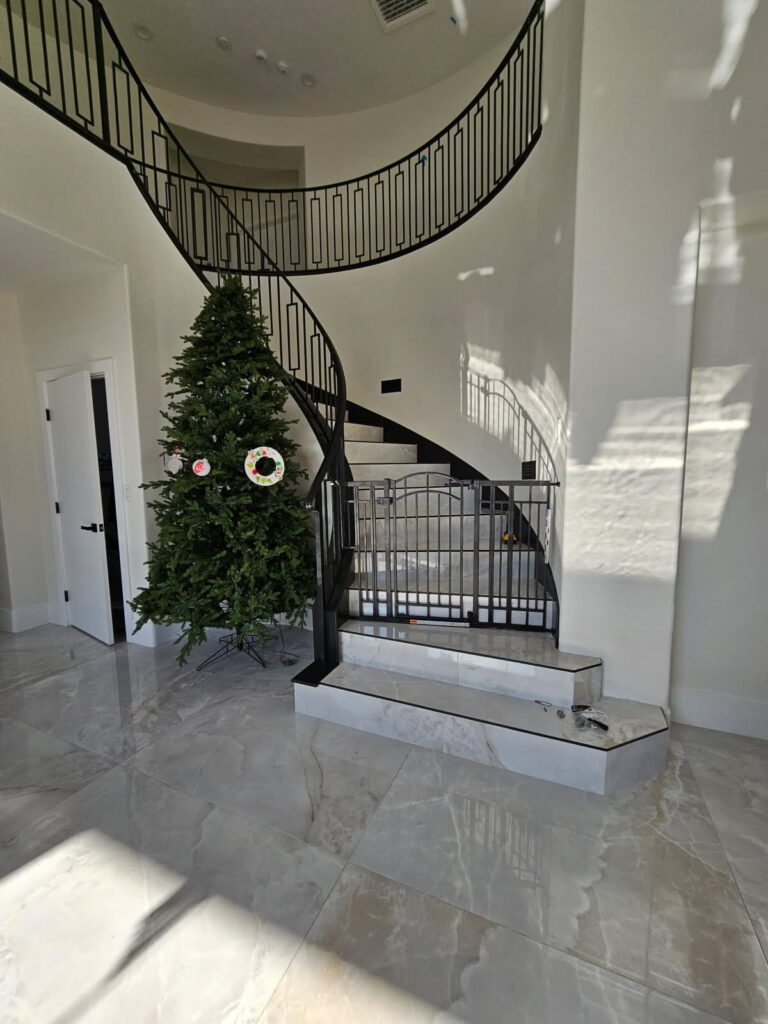
Curved Iron Railings for Grand Staircases
Not every modern railing is straight and minimal. A curved staircase often needs a railing with movement. In that case, iron is a beautiful material because it can follow the shape of the stairway while still feeling strong and elegant.
A modern curved railing may use simple vertical balusters, a smooth continuous handrail, or a restrained pattern that follows the arc of the stairs. The goal is to highlight the curve without overcrowding it.
This type of railing works well in a foyer where the staircase is one of the first things guests see. It can feel luxurious without relying on heavy ornament. The curve itself becomes the statement.
For homes with custom iron entry doors, a curved iron stair railing can also create a sense of continuity. The exterior entry and interior staircase begin to speak the same design language.
Minimalist Railings for Floating Stairs
Floating stairs already have a strong modern identity. The railing should support that look instead of weighing it down. Glass, slim iron, or cable-style designs are common choices because they keep the structure visually light.
A minimalist railing works best when every detail is precise. The spacing, posts, handrail profile, and finish all become more noticeable because there is less ornament to distract the eye. In minimalist design, small imperfections stand out.
Black metal can create a sharp outline against pale walls. Brushed metal can feel softer and more contemporary. Glass can make the stair treads look as if they are suspended in the room.
This idea is ideal for homes with clean architecture, open floor plans, and simple materials. It is less about decoration and more about proportion, shadow, and light.
Modern Wrought Iron Without Heavy Ornament
Many people hear “wrought iron” and picture old-world scrollwork. That can be beautiful in the right setting, but modern wrought iron can be far more restrained. Clean bars, simplified curves, subtle hammered textures, and custom patterns can give iron a fresh interior look.
The advantage of iron is that it has visual weight without feeling generic. Even a simple iron railing can add depth because the material has substance. It feels crafted rather than temporary.
For a modern interior, avoid overly busy scrolls unless the home has Mediterranean, Tuscan, or traditional architecture that supports them. Instead, consider softer curves, long vertical lines, or a single repeating detail. The railing can still feel artisanal, but in a quieter way.
This is where custom design becomes valuable. A homeowner can borrow the strength and craftsmanship of traditional ironwork while shaping the railing for a cleaner, more current home.
Matching the Railing to Your Interior Style
A railing should not be chosen in isolation. It should relate to the home’s floors, doors, hardware, wall color, lighting, and architectural style. The same black iron railing can feel modern farmhouse in one house, industrial in another, and luxury contemporary in a third.
For Contemporary Homes
Contemporary homes usually look best with clean lines, open sightlines, and limited ornament. Consider glass with metal posts, slim vertical iron, or simple horizontal metal. Keep the finish consistent with window frames, door hardware, or lighting.
A contemporary railing should feel intentional but not overly decorative. The beauty comes from the line, the material, and the way light moves around it.
For Transitional Homes
Transitional interiors blend classic and modern details. This is where iron and wood combinations shine. A simple black iron railing with a warm wood handrail can update the staircase while still respecting traditional trim, paneled walls, or classic flooring.
Geometric iron patterns can also work if they are subtle. The goal is to bridge old and new, not erase the home’s character.
For Mediterranean or Old-World Homes
Mediterranean, Tuscan, and old-world homes can handle more detail, but a modern refresh often means simplifying the pattern. Instead of dense scrollwork, choose elongated curves, wider spacing, or a cleaner iron profile.
A dark bronze, black, or copper-influenced finish can complement warm stone, arched doorways, and textured walls. The railing should feel crafted and graceful, not heavy.
For Modern Farmhouse Interiors
Modern farmhouse homes often use black metal, natural wood, white walls, and warm lighting. A black iron railing with vertical balusters is a strong fit. It feels clean without becoming too sleek.
To keep it from looking generic, pay attention to the handrail and posts. A slightly more substantial newel post or a warm wood top rail can make the staircase feel custom.
For Luxury Entryways
If the staircase is visible from the front door, the railing should feel connected to the entry experience. This is especially true in homes with iron entry doors or statement exterior doors. The materials do not need to match exactly, but they should relate.
A black iron entry door and black iron stair railing can create a strong first impression. A bronze-toned door finish can be echoed through railing details, lighting, or hardware. A glass and iron door can pair beautifully with a railing that uses open metalwork or glass panels.
The entry and staircase are often the first architectural elements guests notice. Treating them as a pair can make the home feel more designed.
Finish Ideas That Make a Modern Railing Stand Out
The railing finish has a major effect on the final look. The same design can feel bold, soft, rustic, or formal depending on the color and surface treatment.
Matte Black
Matte black is crisp, versatile, and modern. It works with almost every wood tone and gives the staircase a clean outline. It is especially effective in white, cream, or light gray interiors because the contrast is clear.
A matte black railing also pairs well with black door hardware, black-framed windows, and iron entry doors.
Dark Bronze
Dark bronze feels warmer than black. It is a good choice for homes with beige, taupe, stone, travertine, or warm wood tones. It still gives the railing definition, but with a softer mood.
Bronze can work beautifully in transitional, Mediterranean, and luxury interiors.
Brushed Metal
Brushed silver, pewter, or steel-toned finishes can feel sleek and contemporary. They work well in homes with cool color palettes, modern kitchens, stainless appliances, or polished concrete floors.
The look is cleaner and less dramatic than black. It is a good option for homeowners who want a modern railing without strong contrast.
Soft White or Light Finishes
A light railing finish can make the staircase feel airy and subtle. White or off-white metal may work in coastal, minimalist, or soft contemporary interiors. The effect is quieter than black and can help the railing blend into the architecture.
This approach is best when the surrounding walls, trim, or stair materials support the lighter palette.
Railing Ideas for Small or Dark Staircases
A small staircase can still look high-end. The trick is to reduce visual clutter and improve light flow.
A slim vertical iron railing can open the stairway without removing its structure. Glass panels can help borrowed light move through the space. A simple handrail with narrow posts can make a tight stairwell feel less boxed in.
Avoid bulky newel posts, heavy caps, and overly detailed patterns in a small staircase unless the home’s architecture truly calls for them. Large decorative elements can crowd the view.
Color also matters. A black railing can look sharp, but in a very dark stairwell it may feel heavy. Pair it with lighter walls, better lighting, or warm wood treads. A bronze or brushed finish may feel softer in low light.
Wall sconces, stair lights, and overhead fixtures can also change how the railing reads. Metal railings create shadows, and those shadows can be beautiful when the lighting is planned well.
Railing Ideas for Open Floor Plans
In an open floor plan, the railing is part of the main room. It is not hidden in a hallway. That means it needs to coordinate with furniture, lighting, flooring, and the kitchen or entry area.
For open spaces, simpler railings often work best. Slim iron balusters, glass panels, or geometric patterns with generous spacing can define the stairway without blocking the view.
Think about repetition. If the kitchen has black cabinet pulls, a black railing can feel connected. If the living room has a bronze chandelier, a bronze railing finish may make sense. If the entry door has ironwork, an iron stair railing can carry that material indoors.
The railing does not have to match every detail. It just needs to feel like part of the same design story.
How to Choose Between Iron, Glass, Wood, and Mixed Materials
Each railing material creates a different feeling.
Iron feels strong, architectural, and custom. It can be minimal or decorative depending on the design. It is a natural fit for homeowners who already appreciate iron doors, gates, or handcrafted metal details.
Glass feels open, bright, and sleek. It is ideal for preserving views and light, but it requires more visible cleaning.
Wood feels warm, familiar, and comfortable. On its own, it may feel traditional, but paired with iron or metal it can look very current.
Mixed-material railings often offer the best balance. Iron and wood feel warm modern. Iron and glass feel elegant and open. Metal and wood can feel industrial or transitional depending on the finish.
The best choice depends on what the room needs. If the space feels too plain, iron can add definition. If it feels too dark, glass can open it. If it feels too cold, wood can warm it up.
Details That Separate a Custom Railing From a Basic One
A railing does not need to be complicated to look custom. Often, the difference is in the details.
Post placement is one example. Posts that align cleanly with stair treads look more intentional. A handrail that feels comfortable and proportionate improves both appearance and daily use. A finish that coordinates with nearby hardware makes the railing feel integrated.
The transition points matter too. Where the railing starts, turns, meets a landing, or ends at the wall can either look graceful or awkward. A custom approach allows these details to be resolved in a way that fits the actual staircase.
Pattern scale is another major factor. A design that looks beautiful on a large staircase may feel too busy on a narrow one. A railing that looks delicate in a photo may need more visual weight in a grand foyer. Custom sizing and thoughtful proportions help avoid those mismatches.
For homeowners considering iron railings, this is where working with a design-focused ironwork company becomes useful. Alpha Iron Doors’ broader product focus includes iron railings, custom orders, and design options, so the railing can be approached as part of the home’s architectural character rather than an afterthought.
Safety Still Shapes the Design
A stair railing can be beautiful, but it still has a job to do. It needs to support movement, protect open sides, and meet the requirements that apply to the home. Local codes may affect railing height, handrail shape, spacing between elements, and where guardrails are required.
This does not mean the design has to look plain. It means the best railing ideas are developed with safety and code in mind from the beginning. A professional can help determine what is appropriate for the staircase, especially if the design involves open risers, glass panels, horizontal elements, or custom ironwork.
Homeowners should avoid choosing a railing from a photo alone. A design that looks good online may not work for the dimensions, layout, or code requirements of a specific home. The inspiration matters, but the final design should be adapted to the actual space.
Common Mistakes That Make a Stair Railing Feel Dated
Some railings age a home because they carry too much visual weight. Others look dated because they do not relate to anything else in the interior.
One common mistake is choosing a railing that is too ornate for the home. Detailed scrollwork can be beautiful in the right architecture, but in a clean modern space it may feel out of place.
Another mistake is ignoring finish coordination. A railing in one metal tone, door hardware in another, and lighting in a third can work if the mix is intentional. If not, the room may feel pieced together.
A third mistake is choosing bulky components for a small staircase. Thick posts and heavy rails can make the stairway feel cramped.
Homeowners also sometimes overlook the view from the top landing. The railing may look good from the foyer but awkward from upstairs. Since staircases are experienced from multiple angles, every side matters.
The best modern railing designs feel balanced from near and far. They look good in the room, on the stairs, and from the landing above.
Bringing the Entry and Staircase Together
Many homes have a strong relationship between the front entry and staircase. You open the door and immediately see the stairs. In that layout, the railing has a direct effect on the home’s first impression.
If the front door is bold, the railing should not feel like an afterthought. If the entry door has iron details, the staircase can echo that craftsmanship through a clean iron railing. If the entry is bright and modern, glass or slim metal can continue that openness inside.
This does not mean everything needs to match perfectly. A home can feel more sophisticated when materials relate rather than repeat exactly. For example, a modern iron door may pair with a simpler black iron stair railing. A warm bronze door finish may inspire bronze lighting and subtle railing accents. A custom entry with glass may connect naturally to a stair railing that preserves light.
Alpha Iron Doors work is centered on handcrafted iron doors and related products, so this type of design connection makes sense for homeowners who want the entrance and interior to feel cohesive.
The Best Modern Stair Railing Is the One That Fits the House
A modern stair railing should not look like it was copied from another home. It should fit the architecture, the materials, the people living there, and the way the staircase is seen every day.
For some homes, the best upgrade is a slim black iron railing that adds crisp contrast. For others, it is glass that opens the room. A grand foyer may call for a curved custom iron railing. A warm transitional home may look best with iron and wood. A modern remodel may need a geometric pattern that turns the staircase into a feature.
The right railing can make the interior feel brighter, cleaner, taller, and more finished. It can connect the entry to the living space. It can add craftsmanship without clutter. Most importantly, it can make a staircase feel like a designed part of the home rather than a builder-grade necessity.
If your staircase is one of the first things people see, it deserves the same attention as the front door, flooring, lighting, and furniture. A well-designed railing does not simply complete the stairs. It upgrades the entire interior.