
Here is something that catches a lot of people off guard partway through ordering a custom door. You spend weeks deciding on steel finish, glass style, and panel design, then get to the hardware question near the end and realize you have not really thought about it at all.
That is a mistake worth avoiding, because hardware is not the small stuff. It is the part of the door you touch every single day, the part that determines whether the door locks properly, and, honestly, the part that either finishes off the whole design or quietly undercuts it. Let us walk through how to actually make this decision instead of picking whatever finish looks closest to the photos.
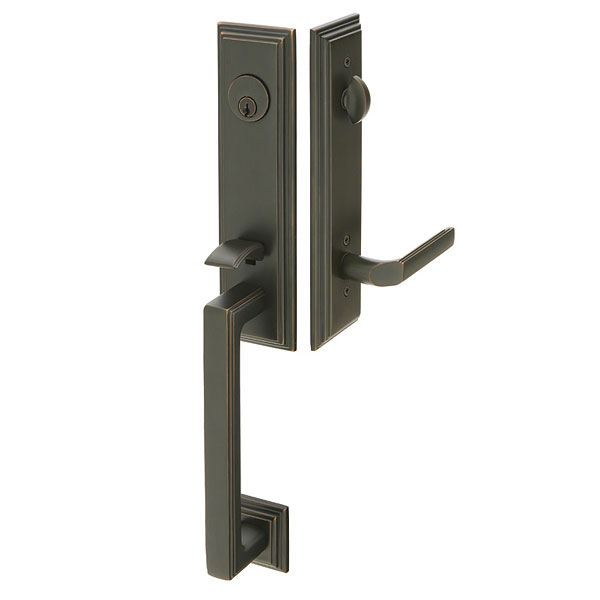
Why Iron Door Hardware Is Not an Afterthought
Hardware does two jobs at once, and it is worth separating them because they get evaluated differently.
The first job is security. A lock-set is only as good as its internal mechanism and how well it is installed into the door and frame. A beautiful handle with a weak internal lock body is, functionally, a weak lock wearing a nice outfit.
The second job is for daily use. You touch your front door handle more than almost any other hardware in your home. A handle that feels flimsy, sticks, or does not turn smoothly becomes a small daily annoyance that eventually gets noticed by everyone who walks through it, guests included.
Good iron door hardware handles both jobs well, and it is worth treating the decision with the same seriousness you gave the door panel itself, not as a box to check at the very end of the order.
Where Alpha Iron Doors Fits Into This Decision
I will be straightforward about this instead of tiptoeing around it. Alpha Iron Doors fits Emtek hardware across its lineup, and that is worth knowing because it changes the starting point of this whole conversation.
Emtek is a well-known name in the hardware world, specifically because it does not treat lock-sets as an afterthought either. The finishes are built to hold up, the internal mechanisms are solid, and the range of styles is wide enough that matching a specific look, whether that is a clean modern lever or a more traditional handle set, is genuinely achievable rather than a compromise.
What this means practically is that when you order through Alpha Iron Doors, you are not choosing between a nice door and cheap hardware bolted on afterward to save cost. The hardware program is already a serious one before you even get to the finish and lock type decisions covered below. That is a meaningfully different starting position than shopping a door where hardware feels like a line item added on at the end, and it is worth knowing going into your own custom order conversation.
Finish Matching: Getting the Small Details Right
This is where a lot of otherwise well planned doors go slightly wrong, and it has nothing to do with the hardware’s quality. It is about how the finish reads against the door itself.
Warm finishes, think oil-rubbed bronze, aged brass, or a warm graphite, pair naturally with door colors that lean warm too, such as bronze, dark brown, or certain wood-tone finishes. Cool finishes, like matte black, satin nickel, or stainless, sit better against cooler door tones, including true black, charcoal, or brushed silver panels.
Mixing warm and cool tones is not automatically wrong; some homeowners genuinely like the contrast, but it should be a deliberate choice rather than something that happens because two finishes were picked independently without holding them up against each other first. If you are unsure, matte black is close to a universal pairing across most door colors, which is part of why it shows up so often on both traditional and modern entries.
It is worth requesting a physical finish sample if you can, rather than relying on a screen image, since finish photography can shift color noticeably depending on lighting. Our full range of door colors is worth reviewing alongside your hardware finish choice at the same time, not as two separate decisions made weeks apart.
Lockset Types: What You Are Actually Choosing Between
There is more variety here than most people expect, and each type suits a slightly different situation.
A standard deadbolt paired with a separate handle set is the traditional approach, and it remains a solid, reliable option. Two separate mechanisms, one for the handle and latch, one for the deadbolt, means simpler internal parts and, generally, an easier repair if something ever does need service down the line.
A handle-set with an integrated lock combines the deadbolt and handle mechanism into one coordinated unit. These often look more streamlined and can simplify keying, since fewer separate cylinders usually mean fewer keys to manage.
Multi-point locking systems engage the door at several points along its height, not just at the single deadbolt location. This adds meaningful security value on larger or heavier doors, including many double door and pivot configurations, where a single point lock is doing more work than it was really designed for on a wide opening.
For most single-door residential entries, a quality deadbolt and handle combination covers the need well. For larger openings, double doors, or anyone prioritizing maximum security, a multi-point system is worth the conversation, and it is something to bring up specifically during your custom order rather than assuming it is automatically included.
Smart Locks on an Iron Door
Smart locks have moved from novelty to genuinely mainstream over the past several years, and it is a reasonable question whether one makes sense on an iron entry door specifically.
The short answer is yes, and it is worth knowing that Alpha Iron Doors offers EmPowered smart lock options as part of its hardware program, not as a separate aftermarket add-on bolted onto the door after the fact. That distinction matters more than it might seem. A smart lock retrofitted onto a door after installation, drilled and fitted by someone unfamiliar with the specific door and frame, is a different experience than one specified and installed as part of the original build.
A keypad- or app-controlled smart deadbolt offers a few genuinely useful advantages for an entry door specifically. Keyless entry means no more digging for keys with an armful of groceries. Temporary or scheduled codes are useful for house cleaners, contractors, or guests without handing out a physical key that has to be tracked down and collected later. And activity logs give a simple record of when the door was locked and unlocked, which some homeowners find genuinely reassuring, particularly for a second home or a property that sits empty for stretches of time.
The trade-off worth knowing about upfront is battery dependency. A smart lock needs power to function electronically, though most quality models retain a manual key override specifically for this reason, so it is worth confirming that detail rather than assuming it by default.
Security Ratings: What the Numbers Actually Mean
Lockset security is generally graded using a system maintained by the Builders Hardware Manufacturers Association, commonly referred to as BHMA or ANSI grading. Grade 1 represents the highest commercial-level security and durability rating, Grade 2 is a strong residential standard, and Grade 3 is a lighter-duty rating more common in budget hardware.
For a front entry door, and especially for a substantial iron door, it is worth asking specifically what grade the hardware carries rather than assuming a higher price automatically means a higher grade. This is a specific, verifiable spec, not a marketing claim, and any hardware supplier worth working with should be able to answer the question directly. UL certification is another marker worth checking for, since it indicates the hardware has been independently tested against specific security and performance benchmarks rather than simply asserted by the manufacturer.
Matching Hardware to How You Actually Use the Door
This part gets overlooked because it feels less exciting than picking a finish, but it genuinely affects day-to-day satisfaction with the final result.
If your entry door sees heavy daily traffic, family members, deliveries, guests, a handle and lock rated for frequent use matter more than they would on a door that opens once or twice a day. This is particularly relevant for pivot doors and larger double doors, where the hardware is managing more weight and torque with every use.
If you are ordering a matching pair for a double-door configuration, think through which side gets the active daily use and which stays mostly closed with a secondary bolt. This affects where the primary lock-set and any smart lock functionality should go, and it is a detail worth flagging during your order rather than assuming it will be sorted out automatically.
If accessibility is a consideration for anyone in the household, lever-style handles are generally easier to operate than knob-style hardware, particularly for anyone with limited hand strength or mobility. It is a small spec choice that makes a real daily difference for the people actually using the door.
Common Hardware Mistakes Worth Avoiding
A few missteps show up often enough in hardware decisions that they are worth naming directly.
Choosing the finish before choosing the door color. Hardware finish decisions genuinely go easier once the door color is locked in, since you are matching against something concrete rather than guessing. Doing it the other way around, picking a favorite handle first and then trying to find a door color that works with it, tends to narrow your options more than necessary.
Assuming all deadbolts are roughly the same. There is real variation in internal mechanism quality, security grading, and even how smoothly a bolt throws, between a budget deadbolt and a well-made one. This is not a place where the visible difference on a showroom wall tells you much about what is happening inside the lock body.
Skipping the security grade question entirely. Most homeowners never ask what BHMA or ANSI grade their hardware carries, largely because they do not know to ask. It takes one question to a design consultant, and it is worth asking on every custom order, not just for peace of mind but because it is a genuinely useful, objective spec to compare across options.
Forgetting to plan for how the door will actually be used day to day. A gorgeous handle that turns out to be awkward for the specific way your family uses the front door, maybe kids struggling with a stiff lever, or a smart lock keypad mounted somewhere inconvenient, is the kind of thing that is easy to fix on paper before installation and genuinely annoying to live with afterward.
Coordinating Hardware Across Gates, Railings, and Doors
If your project extends beyond a single entry door, matching gates, or interior railings, it is worth thinking about hardware finish as a whole-property decision rather than a series of separate choices made room by room.
A front door handle in matte black paired with brass gate hardware down at the driveway can read as inconsistent once you notice it, even if neither choice is wrong on its own. Keeping hardware finishes within the same family, not necessarily identical, but clearly related, across your iron gate and front entry creates a sense that the whole property was designed together.
This is easiest to plan early, before individual pieces are ordered separately over time. If you know a gate, railing, or secondary door project is coming down the line, it is worth mentioning that to your design consultant during your entry door’s hardware conversation, even if the other project is still months away.
Putting Your Iron Door Hardware Order Together
By the time you are finalizing hardware, you should already have a door style, color, and glass package selected, since hardware finish and function decisions are easiest to make once you can see them against the rest of the design rather than in isolation.
A few things worth confirming before your order is finalized: the exact finish name and whether a physical sample is available, whether you want a standard deadbolt, an integrated handle-set, or a multi-point system, whether a smart lock makes sense for how the household actually uses the door, and what security grade the hardware carries. Our hardware and lock page walks through the current Emtek lineup available across the collection, and it is a good place to start narrowing down finish and style before your final custom order conversation.
If you have not yet gone through the broader custom ordering process, our earlier guide on what to know before ordering a custom iron door covers the full sequence of decisions, hardware included, so you know roughly where in that process this conversation typically happens.
A Word on Warranty and Long-Term Support
Hardware, like the door itself, should be backed by something more substantial than a friendly assurance at the time of sale. It is worth asking specifically what is covered if a lock mechanism fails, a finish starts to wear unevenly, or a smart lock component needs service down the road.
Alpha Iron Doors backs its full builds, structure, finish, and rust protection, with clearly outlined terms on our warranty page, and hardware questions are part of that same conversation your design consultant will walk you through during your order. It is a reasonable thing to ask any door company directly, and the answer tells you a fair amount about how seriously they treat the hardware side of the build, not just the steel and glass.
The Bottom Line
Hardware is not the last small decision in a custom iron door order. It is the part of the door you will physically interact with the most, and it carries real weight for both security and daily usability, not just appearance.
Take the finish matching seriously, understand what type of lock-set actually suits your door and household, ask real questions about security grading rather than assuming a nice-looking handle means a strong lock, and decide honestly whether a smart lock genuinely fits how you live. Alpha Iron Doors builds this decision into the order process from the start with a genuine Emtek hardware program, smart lock options included, rather than treating it as an accessory tacked on at checkout. Browse the current hardware selection or the full door inventory to start narrowing down what actually fits your entry, or read more about the craftsmanship behind the full build on our About Us page.