
The right iron door can completely change the way your home feels from the street. It can make a simple entryway look grand, give a modern home more architectural presence, and add a sense of strength before anyone even steps inside. But once homeowners start looking at designs, one question comes up again and again: which glass should I choose?
Iron door glass options affect more than appearance. The glass you select can change how much natural light enters your home, how much privacy you have from the street, how your entry looks during the day and at night, and how well the door fits your lifestyle. A clear glass panel may look open and bright, but it might not feel right if your front door faces a sidewalk. Frosted glass may give excellent privacy, but some homeowners prefer more texture or a warmer decorative look. Reflective or tinted glass may feel sleek and modern, especially in a sunny climate, but it should still match the style of the home.
At Alpha Iron Doors, we help homeowners think through these decisions every day. A glass choice should never feel like an afterthought. It is one of the details that determines whether your iron door feels elegant, practical, private, bold, welcoming, or all of the above.
This guide explains the most important iron door glass options, how they perform in real homes, and how to choose the right balance of privacy, light, and style.
Why Glass Matters So Much in an Iron Door
The iron frame gives the door strength, structure, and character. The glass controls the mood.
That may sound simple, but it matters. A front door is one of the few design features that affects both the outside and inside of your home. From the exterior, glass adds depth, reflection, pattern, and curb appeal. From the interior, it changes the way natural light moves through your entry, hallway, foyer, or living space.
A homeowner choosing glass should think about five things:
Privacy: Can people see into the home from the street or walkway?
Light: Will the glass brighten the entry or keep it more subdued?
Style: Does the glass match the door design and home architecture?
Maintenance: Will the glass be easy to clean and live with?
Comfort: Will the glass help reduce glare, heat, or exposure?
The best choice is not always the most private or the clearest. It is the glass that fits the way the home is actually used.
How to Choose Iron Door Glass Options for Your Home
Before comparing individual glass types, start with your home’s layout. The same glass can feel completely different depending on where the door is located.
Consider How Close Your Entry Is to the Street
If your front door faces a busy street, sidewalk, or neighbor’s window, privacy will likely be a top priority. Clear glass may still work if the door has decorative ironwork, a deep porch, or landscaping in front of it, but most homeowners in this situation prefer frosted, rainstorm, reed, pinhead, hammered, Aquatex, or another textured glass.
If your entry is set back from the street or behind a courtyard, you may have more freedom to choose clear, Low-E, grey tint, or reflective glass.
Think About What People Can See at Night
Many homeowners judge glass during the day, but privacy changes after sunset. When the lights are on inside and the outside is dark, some glass options become more revealing. Clear glass offers the least privacy at night. Lightly textured or tinted glass may soften the view, but it may not fully block silhouettes.
If nighttime privacy matters, frosted, rainstorm, reed, hammered, Aquatex, granite, pinhead, or similar textured glass options are often better choices.
Decide How Much Natural Light You Want
One of the main reasons homeowners choose iron doors with glass is to brighten an entryway. If your foyer feels dark, solid doors can make the space feel closed off. Glass changes that immediately.
Clear glass provides the brightest look. Frosted glass allows light while diffusing the view. Textured glass brings in light with more movement and visual interest. Tinted or reflective glass may reduce glare while still making the entry feel open.
Match the Glass to the Door Design
A modern iron door usually looks best with glass that feels clean and intentional, such as clear, frosted, reed, grey tint, Low-E, or reflective glass. Traditional or Mediterranean-inspired iron doors can look beautiful with rainstorm, Flemish, hammered, pinhead, Aquatex, granite, or tea color glass.
The goal is harmony. The ironwork and glass should feel like they were designed together, not chosen separately.
Clear Glass: Best for Maximum Light and Open Views
Clear glass is the simplest and most transparent option. It allows the most natural light to pass through and gives the entry a bright, open feeling. For homeowners with a private front yard, gated entry, courtyard, or beautiful exterior view, clear glass can be an excellent choice.
Clear glass works especially well with modern iron doors because it keeps the design clean. It also allows decorative ironwork to stand out without competing against a heavy pattern.
Best For
Clear glass is a strong choice for homes with private entries, larger front yards, gated properties, scenic views, and modern architecture. It is also a good option when the homeowner wants the door itself to feel lighter and more open.
Things to Consider
Clear glass provides the least privacy. If your front door faces the street, a neighbor, or a high-traffic walkway, you may feel exposed. Clear glass also shows fingerprints, dust, and water spots more easily than heavily textured glass.
For homeowners who love the look of clear glass but want more comfort, Low-E glass, tinted glass, or reflective glass may be worth considering.
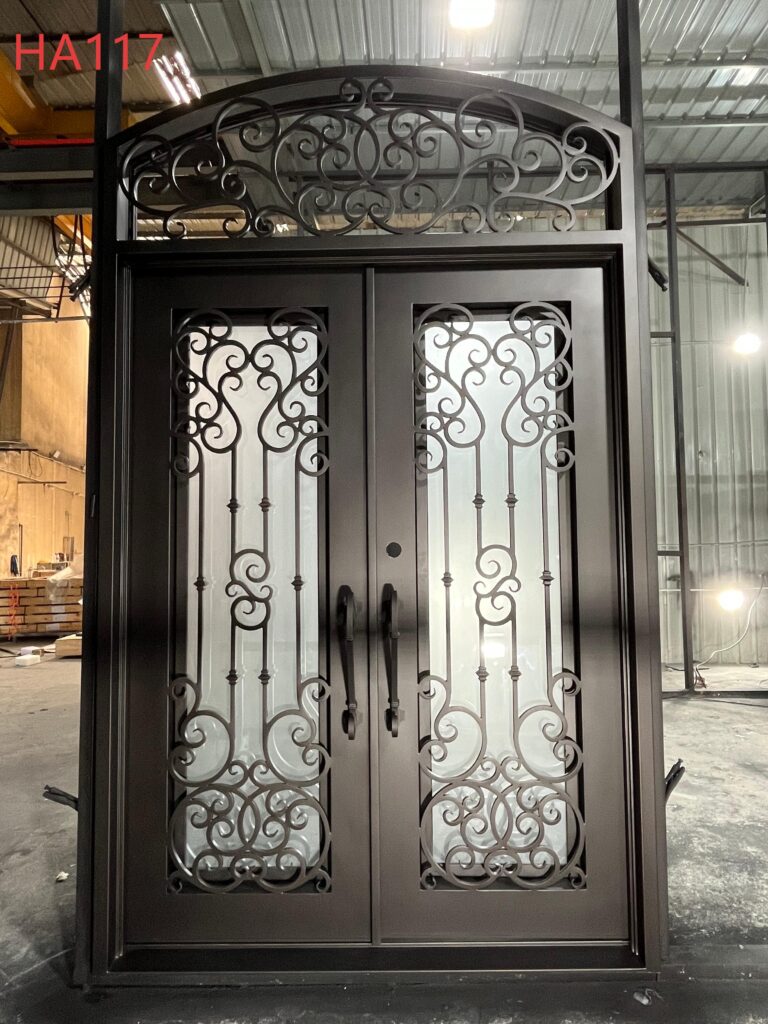
Frosted Glass: Best for Privacy Without Losing Light
Frosted glass is one of the most popular front door privacy glass choices because it solves a common problem. Homeowners want sunlight, but they do not want the inside of the home on display.
Frosted glass softens visibility while still allowing the entryway to feel bright. Instead of a clear view, it creates a smooth, diffused look. This makes it especially useful for homes where the front door opens directly into a foyer, staircase, hallway, or living area.
Best For
Frosted glass is ideal for homeowners who want privacy, natural light, and a clean design. It works well with modern, transitional, and minimalist iron doors. It is also a practical choice for homes close to sidewalks or neighbors.
Things to Consider
Frosted glass gives a softer look, but it may not have the decorative depth of textured glass. If you want privacy with more movement, rainstorm, reed, hammered, pinhead, or Aquatex glass may feel more interesting.
Rainstorm Glass: Best for Soft Privacy and Decorative Movement
Rainstorm glass has a flowing, water-like texture that distorts the view while letting light pass through. It is one of the most versatile decorative glass entry door choices because it adds privacy without making the door feel heavy.
The texture catches light throughout the day, which gives the entry a more dynamic look. It can soften a large iron door and make the overall design feel warmer.
Best For
Rainstorm glass works well for traditional, Mediterranean, Tuscan, and transitional homes. It is a good fit for homeowners who want privacy but do not want a plain frosted surface.
Things to Consider
Rainstorm glass obscures details, but depending on lighting conditions, it may still show movement or silhouettes. It is a privacy-friendly choice, but homeowners wanting maximum privacy may prefer frosted, Aquatex, granite, or other heavier obscure glass options.
Reed Glass: Best for Modern Texture and Vertical Style
Reed glass, sometimes called reeded glass, has a linear texture that feels both classic and modern. The vertical pattern makes it especially attractive on tall iron doors because it complements the height of the entry.
Reed glass gives privacy by bending and distorting the view. It does not feel as flat as frosted glass, and it usually brings a more designer-style look to the door.
Best For
Reed glass is a great fit for modern, transitional, and luxury homes. It works beautifully with tall single doors, double doors, pivot-style designs, and clean iron frames.
Things to Consider
Because reed glass has a directional pattern, it should be paired thoughtfully with the iron door design. It looks best when the door’s lines and proportions feel balanced with the glass texture.
Pinhead Glass: Best for Subtle Texture and Classic Privacy
Pinhead glass has a small, repeating texture that helps obscure the view while still letting in natural light. It is a good option for homeowners who want something more decorative than frosted glass but less dramatic than hammered or rainstorm glass.
This type of glass can feel classic, understated, and easy to live with. It does not demand too much attention, which makes it useful when the ironwork is already detailed.
Best For
Pinhead glass is a smart choice for traditional iron doors, detailed scrollwork, and homes where the glass should support the design without becoming the main feature.
Things to Consider
If you want a bold texture, pinhead glass may feel too quiet. If you want a cleaner modern style, frosted, reed, grey tint, or clear glass may be a better fit.
Flemish Glass: Best for Old-World Character
Flemish glass has a wavy, handcrafted look that works beautifully with traditional iron doors. It adds movement, charm, and a sense of old-world craftsmanship. For homes with Mediterranean, Tuscan, European, or classic exterior details, Flemish glass can feel very natural.
The pattern distorts the view while allowing light to enter, making it both decorative and practical.
Best For
Flemish glass is best for homeowners who want character and elegance. It pairs well with arched doors, decorative ironwork, warm finishes, and homes that already have classic architectural details.
Things to Consider
Flemish glass may not be the best match for ultra-modern homes. It has a more traditional personality, so it should be chosen when that look supports the rest of the exterior.
Hammered Glass: Best for Handcrafted Texture
Hammered glass has a textured surface that resembles hand-worked metal or rippled water. It is a strong choice for iron doors because the texture feels connected to the craftsmanship of the door itself.
It provides privacy, hides small smudges better than clear glass, and gives the entry a rich, custom look.
Best For
Hammered glass works well with custom iron doors, rustic luxury homes, Mediterranean designs, and entryways where texture is part of the overall style.
Things to Consider
Hammered glass has a noticeable look. If the ironwork is already very ornate, the combination may feel busy unless the design is balanced carefully.
Aquatex Glass: Best for Heavy Obscure Privacy
Aquatex glass has a strong obscure texture that provides a high level of privacy while still allowing light through. It is often a good choice for homeowners who want the benefits of glass but do not want clear visibility into the home.
Because the texture is more pronounced, it can also help the glass feel less delicate and more substantial.
Best For
Aquatex glass is a good fit for privacy-focused homeowners, street-facing entries, and homes where the front door opens directly into a main living area.
Things to Consider
Aquatex glass may diffuse the view more heavily than some homeowners expect. If you want to see shapes, landscaping, or movement outside, choose a lighter texture.
Granite Glass: Best for Maximum Obscurity with Visual Interest
Granite glass has a heavier texture that can create strong privacy. It is useful when the homeowner wants natural light but does not want the glass to feel transparent.
This option can work well on larger glass panels because the texture adds depth and prevents the door from feeling too exposed.
Best For
Granite glass is ideal for homes close to neighbors, walkways, or public-facing areas. It is also a good option for homeowners who want decorative privacy without using blinds or curtains.
Things to Consider
The heavier texture can soften the amount of visible detail outside. That is usually the point, but it is worth considering if you enjoy seeing through your front door.
Grey Tint Glass: Best for a Sleek, Modern Look
Grey tint glass gives an iron door a more contemporary feel. It reduces the brightness of the glass and can help soften glare. It also pairs well with matte black, brushed silver, dark copper, and other modern finishes.
Tinted glass is often chosen for style as much as function. It can make a front door feel more polished, especially on homes with modern windows, dark trim, stone, stucco, or clean architectural lines.
Best For
Grey tint glass works well for modern homes, luxury remodels, desert homes, and homeowners who want a sleek look with some reduction in brightness.
Things to Consider
Tinted glass is not the same as full privacy glass. It can reduce visibility during the day, but privacy may change at night when interior lights are on.
Reflective Glass: Best for Daytime Privacy and Contemporary Curb Appeal
Reflective glass has a mirror-like quality from the outside during certain daytime lighting conditions. It can give the door a very modern appearance and may help reduce direct visibility from outside.
For homeowners who want a bold, contemporary entry, reflective glass can be a strong design choice. It pairs especially well with simple iron frames, large panels, and modern exterior finishes.
Best For
Reflective glass is best for modern homes, sunny climates, and entries where daytime privacy and curb appeal are important.
Things to Consider
Reflective glass depends heavily on lighting. During the day, it may feel private from outside. At night, when interior lights are brighter than exterior light, the privacy effect can change. Homeowners should understand this before choosing it as their only privacy solution.
Low-E Glass: Best for Comfort and Energy Awareness
Low-E glass is designed to help manage heat transfer and sunlight performance. For homeowners in bright, sunny climates, it can be an important consideration. It is especially useful when the front door receives strong sun exposure or when the entry area tends to heat up.
Low-E glass is not just about appearance. It is more about comfort, glare, and performance.
Best For
Low-E glass is a good option for homes in sunny areas, south or west-facing entries, and homeowners who want a more comfortable entry without giving up natural light.
Things to Consider
Low-E glass should be considered alongside privacy needs. It can improve comfort, but it may not provide the same privacy as frosted or textured glass unless paired with another obscuring style.
Tea Color Glass: Best for Warmth and Traditional Style
Tea color glass brings a warmer tone to the entry. It can soften sunlight and complement bronze, copper, aged, or warm-toned door finishes. For homes with stone, beige stucco, warm wood tones, or classic architecture, tea color glass can feel more natural than grey or clear glass.
Best For
Tea color glass is ideal for traditional, Mediterranean, Tuscan, and warm exterior palettes.
Things to Consider
Because it changes the tone of incoming light, homeowners should think about how it will look from inside the home as well as outside.
How Much Privacy Do You Really Need?
Privacy is personal. Some homeowners are comfortable with a little visibility if the design is beautiful. Others want the front entry to feel fully protected from outside views.
A simple way to decide is to rank your privacy needs from low to high.
Low privacy need: Your entry is set back, gated, or not visible from the street. Clear, Low-E, grey tint, or reflective glass may work well.
Medium privacy need: Your entry is somewhat visible, but not directly exposed. Rainstorm, reed, pinhead, Flemish, hammered, or grey tint glass may be a good fit.
High privacy need: Your front door faces a street, sidewalk, neighbor, or main living area. Frosted, Aquatex, granite, hammered, rainstorm, or other stronger obscure glass options are usually better.
The right answer also depends on how the home feels inside. If the front door opens into a formal foyer, you may be comfortable with more glass. If it opens straight into the living room, privacy often matters more.
How Glass Affects Curb Appeal
Glass changes the personality of an iron door. The same door design can feel modern with clear glass, private with frosted glass, classic with Flemish glass, and dramatic with reflective glass.
For curb appeal, think about contrast. A detailed iron door may look best with a quieter glass. A simple modern iron door may benefit from reed, grey tint, or reflective glass. A warm Mediterranean home may look more complete with rainstorm, Flemish, hammered, or tea color glass.
Also consider how the door looks from a distance. Some glass textures are subtle up close but disappear from the street. Others create more visible movement. A good showroom visit or gallery review can help you see how each option performs in real settings.
Glass, Ironwork, and Security
Many homeowners ask whether more glass means less security. With a quality iron door, the glass is only one part of the full door system. The frame, steel gauge, hinges, locks, weather stripping, and installation all matter.
A well-made iron door combines strength with beauty. Decorative ironwork can also add a protective layer over glass while creating the design people notice first. For homeowners who want both security and natural light, this is one of the reasons iron doors remain so popular.
When choosing glass, do not look at the panel alone. Look at the whole door.
Operable Glass: A Practical Feature Worth Understanding
One of the most useful features in many iron doors is operable glass. This means the glass panel can open independently from the door, depending on the design. Homeowners like this feature because it can make cleaning easier and allow ventilation without opening the full door.
For homes in Las Vegas and surrounding areas, ventilation and easy maintenance are practical concerns. Dust, sun exposure, and daily use all affect how a front entry feels over time. Operable glass can make the door easier to live with, especially when paired with the right glass texture.
Best Glass Options by Home Style
Modern Homes
Modern homes usually look best with clean, simple choices. Clear glass, frosted glass, reed glass, grey tint glass, reflective glass, and Low-E glass are strong options. These choices support straight lines, larger panels, and minimalist ironwork.
Mediterranean and Tuscan Homes
Mediterranean and Tuscan homes often look best with glass that has warmth and texture. Rainstorm, Flemish, hammered, tea color, granite, and Aquatex glass can all work beautifully. These options pair well with arches, scrollwork, stucco, stone, and warm finishes.
Transitional Homes
Transitional homes can go in several directions. Frosted glass, rainstorm glass, reed glass, pinhead glass, and hammered glass are all flexible choices. The best option depends on whether the home leans more classic or more modern.
Luxury Custom Homes
Luxury homes often benefit from custom pairing. The glass should be chosen with the door size, hardware, finish, lighting, exterior materials, and privacy needs in mind. A pivot door with reflective glass creates a different impression than a double iron door with Flemish glass, even if both are considered luxury.
Best Glass Options by Homeowner Priority
If You Want the Most Natural Light
Choose clear glass, Low-E glass, or lightly textured glass. These options keep the entry bright and open.
If You Want the Most Privacy
Choose frosted, Aquatex, granite, hammered, rainstorm, or other obscure glass options.
If You Want a Modern Look
Choose reed, clear, grey tint, reflective, frosted, or Low-E glass.
If You Want a Traditional Look
Choose Flemish, rainstorm, hammered, pinhead, tea color, or granite glass.
If You Want Low Maintenance
Choose textured glass if you want to hide minor marks more easily. Clear glass is beautiful, but it tends to show smudges faster.
If Your Door Gets Strong Sun
Consider Low-E, grey tint, reflective, or textured glass, depending on your privacy goals.
-768x1024.jpg)
Mistakes to Avoid When Choosing Iron Door Glass
Choosing Based Only on a Small Sample
Glass looks different when it is installed in a full-size door. A small sample can show texture, but it may not show how the glass handles light, distance, or nighttime privacy.
Forgetting About Interior Views
The glass must look good from inside the home too. Think about your flooring, wall color, staircase, lighting, and furniture near the entry.
Ignoring Nighttime Privacy
A glass option that feels private during the day may feel different at night. Always consider how the door will look when interior lights are on.
Choosing a Trend That Does Not Fit the House
A trendy glass style may look great online but feel wrong on your home. The best choice should support your architecture, not fight it.
Treating Glass Separately from Hardware and Finish
Glass, iron finish, handles, hinges, and door shape should work together. A modern pull handle, matte black finish, and reed glass create a very different look from a classic handle, copper finish, and Flemish glass.
How Alpha Iron Doors Helps Homeowners Choose
Choosing glass is easier when you can compare real options. Alpha Iron Doors offers a wide range of door glass options, finishes, shapes, swings, hardware, and custom details so homeowners can create an entry that fits their home instead of settling for a one-size-fits-all door.
Some customers know exactly what they want when they come in. Others only know they want more light, more privacy, or better curb appeal. Both starting points are normal. A good door selection process should help you narrow the choices by lifestyle, architecture, and practical needs.
For example, a homeowner in a busy neighborhood may start with privacy and then choose between frosted, rainstorm, reed, or Aquatex glass. A homeowner building a modern custom home may start with clean lines and then compare clear, grey tint, reflective, and Low-E glass. A homeowner replacing an older front door may focus on making the entry brighter without feeling exposed.
The right glass is the one that solves the real concern.
Final Thoughts: Choose the Glass That Fits Your Life
Iron doors are known for strength, craftsmanship, and curb appeal, but the glass is what makes the entry feel personal. It controls how much light comes in, how much privacy you keep, and how the door connects with the rest of your home.
Clear glass feels open and bright. Frosted glass feels private and clean. Rainstorm glass feels soft and decorative. Reed glass feels modern and refined. Flemish glass feels classic. Hammered glass feels handcrafted. Reflective and tinted glass feel sleek. Low-E glass adds a performance-minded layer for sunny entries.
There is no single best choice for every home. The best iron door glass option is the one that fits your entry, your privacy needs, your architecture, and the way you want your home to feel every day.
At Alpha Iron Doors, we believe the details matter. The glass, finish, hardware, shape, and ironwork all come together to create an entry that feels beautiful, secure, and built around your home.