
A marble table can change the entire feeling of a room, but only if it is chosen with the room in mind. The stone may be beautiful on its own, yet the right piece has to do more than look impressive in a showroom photo. It needs to fit the space, support the way you live, balance the other materials in the home, and feel intentional from the first glance.
That is why choosing marble dining tables, coffee tables, and consoles should start with function, not just color. A dining table becomes the center of meals, gatherings, and daily routines. A coffee table has to work with seating, traffic flow, and everyday use. A console may be narrow, but it can define an entryway, hallway, or living room wall with quiet confidence.
Alpha Iron Doors is known for strong architectural pieces that shape the first impression of a home, and that same design thinking applies to marble furniture. The best pieces feel permanent without feeling heavy, refined without being fragile, and bold without overwhelming the room. This guide will help you understand how to choose marble furniture with that kind of balance.
Start With the Room, Not the Table
The biggest mistake people make with marble furniture is falling in love with the slab before measuring the space. Marble has visual weight. A white marble top with strong gray veining, a black marble console, or a thick sculptural base can command attention quickly. That can be exactly what a room needs, but it can also make a space feel crowded if the scale is wrong.
Before choosing a piece, look at the room from a practical point of view. Where do people walk? What furniture is already fixed in place? Where does natural light enter? Is the room formal, casual, open-concept, narrow, or heavily used every day?
A marble table should improve the room’s rhythm. In a dining room, that means enough space to pull out chairs comfortably. In a living room, it means a coffee table that sits close enough to be useful but not so large that it blocks movement. In an entryway, it means a console that gives you a landing area without turning the walkway into an obstacle.
A good rule is to choose the purpose first, then the shape, then the stone. This order keeps the decision grounded. Marble is naturally expressive, so once the size and function are right, the material can become the highlight instead of the problem.
The Three Main Marble Pieces and What Each One Does Best
Marble furniture works beautifully across several rooms, but dining tables, coffee tables, and consoles each have a different job. Understanding that difference makes the buying decision much easier.
Marble Dining Tables
A marble dining table is usually the most substantial furniture piece in the room. It sets the tone for formal dinners, casual family meals, holidays, and everyday living. Because it takes up a large footprint, the table has to be chosen with both proportion and durability in mind.
Rectangular marble dining tables work well in longer dining rooms and open layouts. They create order and usually provide the easiest seating arrangement. Round marble dining tables soften a room and make conversation feel more natural because everyone faces inward. Oval tables offer a useful middle ground, giving the length of a rectangular table with a softer edge.
The base matters as much as the top. Marble is heavy, so the support system should feel stable and visually balanced. A slim metal base can make a modern room feel lighter. A pedestal base creates a sculptural effect and can make chair placement easier. A broader base adds presence, but it must leave enough legroom for comfort.
Think carefully about how often the table will be used. A formal dining room can handle a more dramatic finish or bold veining. A daily dining area may benefit from a honed or leathered finish that feels softer and can be more forgiving in real life.
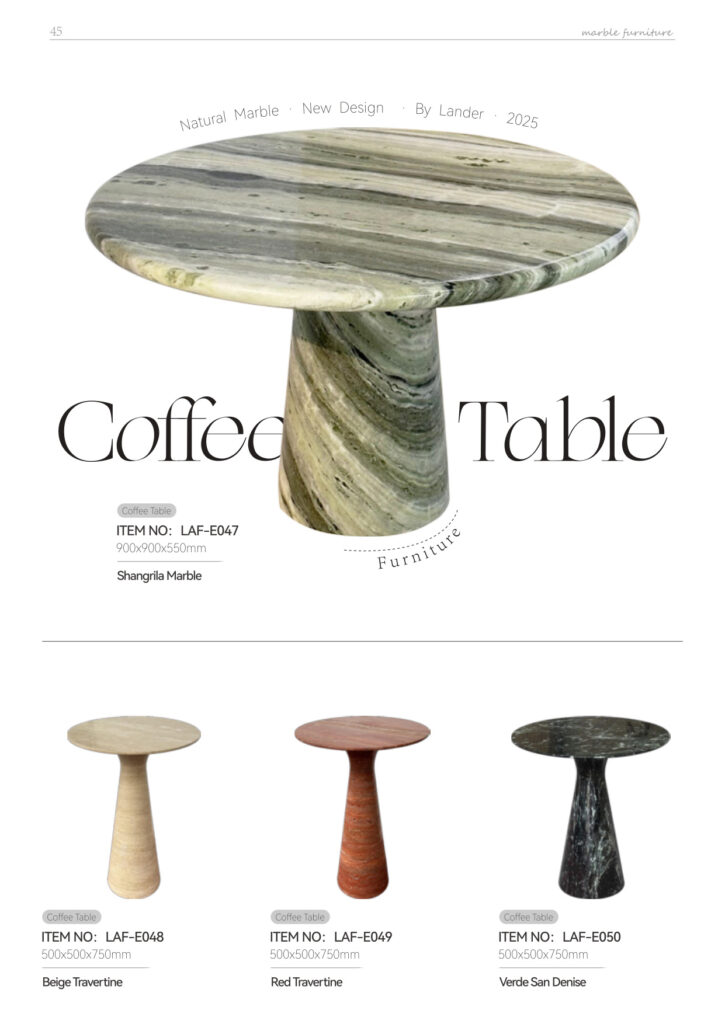
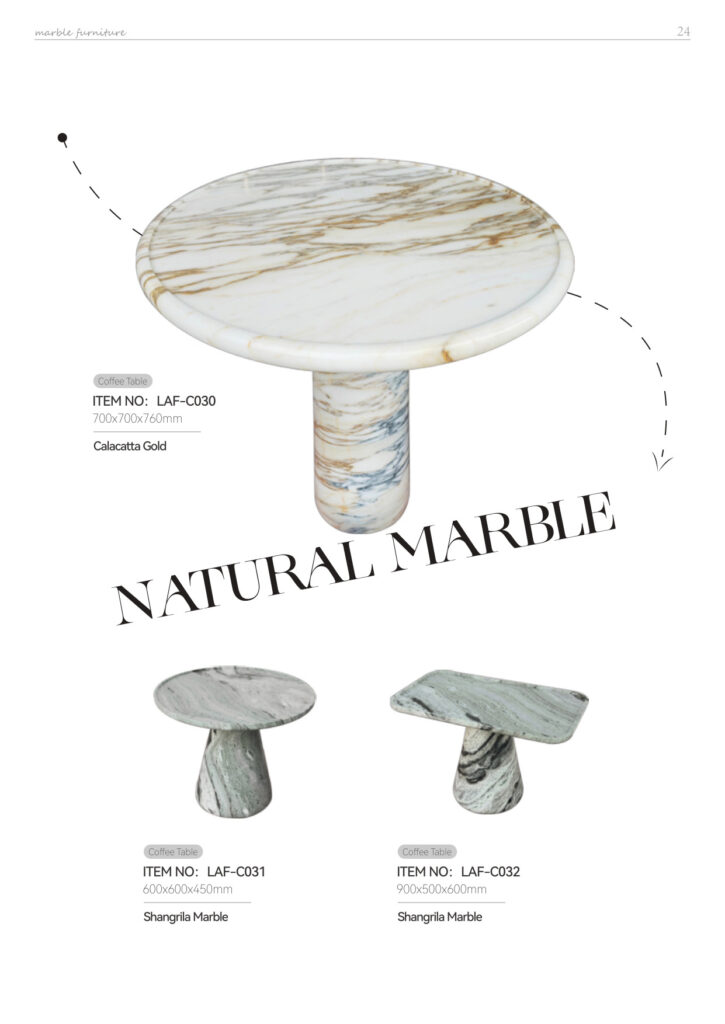
Marble Coffee Tables
A marble coffee table is smaller than a dining table, but it works harder than many people realize. It anchors the seating area, holds books, trays, drinks, remotes, flowers, and sometimes snacks. It also sits in the center of the room, so its shape affects movement immediately.
For most living rooms, the coffee table should relate closely to the sofa. A table that is too tall feels awkward. A table that is too low can look elegant, but it may be less practical for daily use. The ideal height usually sits close to the height of the sofa seat or slightly below it.
Rectangular coffee tables suit long sofas and sectionals. Round or oval marble coffee tables are useful in rooms with children, pets, tight pathways, or curved seating. Square tables can work well with large sectionals, especially when the seating wraps around the table.
Because marble already has visual depth, a coffee table does not need to be over-styled. A tray, a small stack of books, and one sculptural object may be enough. The goal is to leave the surface usable, not turn it into a display that has to be moved every day.
Marble Console Tables
A marble console table is often the most underrated piece in the home. It may be narrow, but it can define an entryway, hallway, stair landing, dining room wall, or the space behind a sofa. It gives a room a finished feeling.
In an entryway, a marble console creates a strong first impression. It can hold a lamp, flowers, a bowl for keys, or a framed mirror above it. In a hallway, it breaks up a long wall and adds architectural interest. Behind a sofa, it can create a polished transition between the living area and the rest of an open floor plan.
Depth is the key measurement. A console should be deep enough to feel useful but not so deep that it interrupts walking space. Height should also relate to the wall, mirror, artwork, or sofa nearby. A console that is too short can feel insignificant. One that is too tall can look disconnected from the rest of the room.
Because consoles are often placed where guests first enter, they are a natural place to use marble with a little drama. Strong veining, a darker stone, or a sculptural base can work beautifully here because the surface is not used as heavily as a dining table.
Choose the Right Shape for the Space
Shape is not only a style choice. It affects comfort, traffic flow, seating, and how the eye moves through a room.
A rectangular marble table brings structure. It is often the best choice for dining rooms, long living rooms, and formal spaces. It pairs well with linear architecture, long rugs, rectangular chandeliers, and symmetrical layouts.
A round marble table feels softer and more intimate. In dining spaces, it encourages conversation. In living rooms, it reduces sharp corners and can make movement easier. Round shapes work especially well in compact rooms or areas where several pathways meet.
An oval marble table offers elegance without the sharpness of a rectangle. It can visually lengthen a room while still feeling graceful. Oval dining tables are useful when you want generous seating but prefer a less rigid look.
A square marble table has a strong, grounded presence. It works best when the room has enough width to support it. Square coffee tables can be excellent with large sectionals, but they may feel bulky in smaller rooms.
For console tables, shape is usually more restrained because the piece sits against a wall or behind furniture. Straight rectangular consoles are the most common, but rounded ends can help soften a tight hallway or entry.
Think About Scale and Clearance
Marble furniture has a way of looking smaller in a large showroom and larger once it arrives at home. Measurements protect you from that surprise.
For a marble dining table, measure the room first, then subtract the space needed for chairs and movement. People should be able to pull out chairs and move around the table without feeling squeezed. If the dining room connects to another area, leave extra room near doorways, walkways, and cabinets.
For a coffee table, measure the seating arrangement. The table should sit close enough to reach from the sofa, but there should still be comfortable walking room. If you have a sectional, consider whether one large table or two smaller tables will serve the room better.
For a console, measure the wall and the walkway. A narrow console can be beautiful, but it should not force people to turn sideways to pass. If the console sits behind a sofa, the height should relate to the sofa back. If it sits under art or a mirror, the width should feel balanced with what hangs above it.
Scale also applies to thickness. A thick marble top feels architectural and luxurious, but it can look heavy in a smaller room. A thinner profile feels cleaner and more modern. Mitered edges can create the appearance of thickness without always using a solid slab of that full depth, depending on fabrication.
Understand Marble as a Natural Material
Marble is not a flat printed pattern. It is a natural stone, which means every slab has its own veining, movement, tone, and mineral character. That uniqueness is the reason people love it, but it also means buyers should be comfortable with variation.
Two pieces of white marble can look very different. One may have soft, misty veining. Another may have bold charcoal movement. Beige marble can feel warm and quiet, while black marble can feel dramatic and formal. Green, brown, gray, and cream stones each bring a different mood.
The more visible the table is, the more important slab selection becomes. A dining table top is a large surface, so veining direction should be considered carefully. Strong veining can guide the eye through the room. If the top is made from more than one piece, seams and pattern alignment matter.
A coffee table can handle expressive veining because it is often viewed from above. A console can also be an ideal place for a dramatic stone, especially in an entryway where the goal is visual impact.
Natural marble also requires realistic expectations. It is durable, but it is not careless-proof. It can etch from acidic liquids, and it can stain if spills are ignored. Many homeowners love marble because it develops character over time. Others prefer to keep the surface as pristine as possible. Knowing which type of owner you are will help you choose the right finish and care routine.
Pick a Finish That Fits Your Lifestyle
The finish changes both the look and the way the marble lives in your home.
Polished marble has a reflective surface that brings out depth and veining. It feels elegant and formal, especially under lighting. It is a popular choice for statement pieces, dining rooms, and spaces where the surface will be treated with care. The tradeoff is that etching can be more visible on a polished surface because dull marks contrast with the shine.
Honed marble has a smooth, matte appearance. It feels softer and more understated. Because it does not rely on a high-gloss reflection, minor wear may blend more naturally. Honed finishes work well in modern homes, casual dining areas, and rooms where the design is calm rather than highly formal.
Leathered marble has subtle texture. It can add grip and depth while making the surface feel more tactile. Depending on the stone, a leathered finish can help disguise light marks better than a polished surface. It is a strong option for homeowners who want luxury with a more relaxed, lived-in feel.
There is no single best finish. The right choice depends on how the table will be used and how much maintenance you are willing to accept. For a dining table used daily, a honed or leathered finish may feel more practical. For a console in an entryway, polished marble can create a striking first impression without facing the same level of food and drink exposure.
Match the Marble to the Rest of the Home
Marble furniture should not feel like it wandered in from a different house. The best piece connects to the architecture, flooring, lighting, doors, hardware, and other materials already present.
If your home has modern iron doors, clean lines, and dark hardware, a marble table with a sleek metal base can feel cohesive. Black, white, gray, or strongly veined stones often pair well with contemporary architecture. If your home leans warmer, with wood floors, soft lighting, and traditional detailing, cream, beige, or brown marble may feel more natural.
Look at undertones. Some white marbles feel cool and blue-gray. Others feel warmer. Some beige stones have yellow undertones, while others lean taupe. Matching undertones matters more than matching exact colors.
Consider contrast as well. A dark marble coffee table can ground a light living room. A pale marble dining table can brighten a room with dark floors. A veined console can bring movement to a plain hallway. The goal is not to match everything. The goal is to create a clear relationship between materials.
This is where a showroom visit or careful visual comparison becomes valuable. Seeing marble next to metal finishes, door colors, flooring, and upholstery helps prevent a piece from feeling disconnected once it is installed at home.
Choosing the Right Marble Dining Table
A dining table has to balance beauty with comfort. Start by asking how many people you seat most often, not how many people you might seat once a year. A table that is too large for daily life can make the room feel empty and formal. A table that is too small can feel crowded during ordinary meals.
Next, consider chair clearance. Marble tops often feel visually substantial, and some bases take up more legroom than expected. Before choosing a pedestal, trestle, or full base, imagine where every chair will go. The most beautiful base is not the right base if guests have nowhere comfortable to place their legs.
Edge style also matters. A simple eased edge feels clean and modern. A thicker edge feels more architectural. A rounded edge can be more forgiving in busy homes. A sharp profile may look sleek, but it should be chosen with the room’s use in mind.
Lighting can make or break a marble dining table. A chandelier or pendant should highlight the surface without creating harsh glare. Polished marble reflects more light, while honed marble absorbs it softly. If the dining room receives strong sunlight, consider how glare and heat may affect the experience.
Chairs should not fight the table. If the marble has dramatic veining, quieter chairs often work best. If the table is simple and pale, chairs can carry more texture or contrast. Upholstered chairs bring softness to stone. Wood chairs add warmth. Metal chairs can create a sharper, modern look.
Choosing the Right Marble Coffee Table
A marble coffee table should feel inviting, not precious. It sits in the middle of daily life, so the right piece depends on how the living room is used.
If the room is mainly for entertaining, a sculptural marble coffee table can become the focal point. If the room is used for family movie nights, snacks, and daily lounging, look for a shape and finish that feels comfortable to live with. Round edges, honed finishes, and stable bases can make the piece feel less formal.
The table should relate to the sofa length. A very small coffee table in front of a large sofa looks accidental. A very large table can make the seating area feel blocked. In many rooms, the coffee table should be visually substantial enough to anchor the seating, but open enough to allow movement.
Think about surface use. Will you place drinks on it? Use coasters. Will children sit nearby? Avoid sharp corners if that is a concern. Do you like styling with books and objects? Choose a surface size that allows styling while leaving open space. Do you prefer a minimal look? Let the marble itself be the ornament.
The base can change the mood. A thin metal frame makes the marble top feel lighter. A solid marble base feels sculptural and gallery-like. A mixed-material base with wood or metal can help the table connect to the rest of the room.
Choosing the Right Marble Console Table
A console table is all about placement. It has to belong to the wall, the walkway, and the objects around it.
For an entryway, choose a console that feels strong enough to greet guests without crowding the entrance. It should provide a surface for essentials, but it should not become a clutter station. A shallow tray, a lamp, and a mirror can make the area feel polished and useful.
For a hallway, depth is critical. A marble console can make a narrow passage feel finished, but only if people can move easily around it. In a tight hallway, a slim console with a refined profile is better than a deep piece that constantly gets bumped.
For a living room, a console behind a sofa can help divide an open floor plan. It gives the sofa a finished back and creates a place for lighting or décor. In this case, the console height should sit close to the sofa back or slightly below it.
For a dining room, a marble console can act as a serving surface or decorative anchor. It can pair beautifully with a marble dining table, but the pieces do not have to match exactly. In fact, a subtle relationship often looks more sophisticated than a perfect match. You might repeat the stone family, base finish, or color temperature while varying the shape.
Because consoles are often less exposed to spills than dining or coffee tables, they allow more freedom with dramatic marble. A richly veined slab, darker tone, or polished surface can create impact without the same maintenance concerns as a heavily used tabletop.
Look Closely at the Base and Support
Marble is heavy, and that weight needs proper support. A beautiful top on a weak or poorly proportioned base will never feel right.
For dining tables, the base should support the span of the stone and prevent tipping, wobbling, or uneven stress. Long rectangular tops may need more support than a compact round table. The larger the slab, the more important the structure becomes.
For coffee tables, stability matters because people often lean forward, place trays down, or move around the table frequently. A narrow base under a wide top can feel visually interesting, but it must be engineered properly. The table should feel secure from every angle.
For consoles, tipping is a concern because the piece is narrow. Depending on placement, household needs, and design, anchoring may be worth discussing with a professional. This is especially important in homes with children, pets, or high-traffic entryways.
Base material also changes the design language. Metal feels strong and modern. Wood adds warmth. Stone-on-stone construction feels sculptural. A mixed-material design can bridge different parts of the home, especially if you are pairing the table with iron doors, railings, wood doors, or other architectural finishes.
Marble Care: What Real Ownership Looks Like
Marble is not difficult to enjoy, but it rewards good habits. The most important rule is simple: avoid acidic cleaners and acidic spills sitting on the surface. Vinegar, citrus, wine, tomato-based sauces, and harsh bathroom cleaners can dull or etch marble.
For daily cleaning, use a soft cloth and a cleaner intended for natural stone, or a mild pH-neutral cleaner recommended for the surface. Avoid abrasive powders, rough pads, bleach, vinegar, and lemon-based cleaning products. After cleaning, dry the surface to reduce water spots.
Use coasters under drinks, placemats for meals, and trays under bottles or decorative objects that may scratch. Blot spills rather than wiping them across the surface. If the marble is sealed, remember that sealers help resist staining, but they do not make marble impossible to damage. Sealing is protection, not permission to ignore spills.
Dining tables need the most care because food and drinks are involved. Coffee tables need protection from cups, candles, remotes, and decorative objects. Consoles usually need lighter care, but perfume bottles, flower vases, and keys can still leave marks if the surface is not protected.
The good news is that marble does not have to look brand new forever to remain beautiful. Many homeowners appreciate the soft patina that develops with time. The key is deciding whether you want a pristine look or a lived-in luxury feel, then choosing the finish and routine that matches that expectation.
Common Mistakes to Avoid
One common mistake is choosing the most dramatic slab without considering the room. Bold marble can be stunning, but if the space already has strong flooring, patterned rugs, ornate lighting, and heavy furniture, the result can feel busy. Let one or two elements lead the room.
Another mistake is ignoring weight and installation. Marble furniture should be planned as a substantial piece. Measure doorways, stairways, elevators, and room access before selecting a large table. A piece that fits the room on paper still has to get into the home safely.
Some buyers choose a dining table based only on the top and forget the chairs. Always think about seating height, legroom, and how chairs slide under the table. Comfort is part of luxury.
For coffee tables, the biggest mistake is choosing a piece too far from the sofa. A table can be beautiful but inconvenient if no one can reach it. Living room furniture should support real use, not just photography.
For consoles, the mistake is usually depth. A console that is too deep for a hallway or entry turns a graceful design moment into a daily annoyance. Slim, well-proportioned pieces often look more expensive than oversized ones forced into a narrow space.
A final mistake is expecting marble to behave like engineered stone or glass. Natural marble has character, variation, and sensitivity. Understanding that before you buy leads to much better satisfaction after the piece is in your home.
How to Coordinate Multiple Marble Pieces
You do not have to use the same marble on every surface. In fact, too much matching can flatten a room. A home feels more collected when materials relate without repeating exactly.
If you want a marble dining table and a marble coffee table, consider varying the shape or finish. For example, a rectangular dining table with a honed surface can pair with a round polished coffee table in a similar tone. If both pieces have strong veining, keep surrounding furniture quieter.
If you add a console, it can either echo the same stone family or create contrast. A light dining table and a darker entry console can work beautifully if they share a base finish or similar design language. A gray-veined coffee table and a cream console can feel connected through warm metals, upholstery, or wall color.
The key is to repeat one element, not every element. Repeat the base material, the undertone, the finish, or the general level of veining. This keeps the home cohesive without making it look like a furniture set purchased all at once.
Why Marble Works So Well With Architectural Homes
Marble has an architectural quality. It feels permanent, natural, and grounded. That makes it especially effective in homes where entry doors, railings, flooring, lighting, and furniture all contribute to the overall impression.
A strong entry door creates the first statement from outside. Marble furniture can continue that statement inside. An entry console can connect the foyer to the front door. A dining table can become the central gathering point beyond the entry. A coffee table can bring the same material richness into the living area.
For homes with iron, glass, wood, and stone details, marble helps tie those materials together. It has enough strength to stand beside iron and enough natural movement to soften modern architecture. It can feel classic, modern, Mediterranean, transitional, or minimal depending on the stone and base.
This is why the best marble piece is not chosen in isolation. It should be part of the larger home story. The front door, the hallway, the dining room, and the living room should feel connected, even if each space has its own personality.
What to Look for Before You Buy
Before choosing a marble table or console, review the piece from several angles. Look at the top, the base, the edges, the underside, and the way the stone meets the support. Check whether the veining feels balanced. Look for a finish that suits your lifestyle. Ask how the piece should be cleaned and maintained.
For dining tables, sit at the table if possible. Make sure the base does not interfere with knees or chairs. For coffee tables, imagine the sofa around it and how the table will be used on a normal evening. For consoles, think about the wall, artwork, mirror, lighting, and walking path.
Bring room measurements with you. Photos of the space also help. Include images of flooring, doors, hardware, rugs, and nearby furniture. Marble has undertones that are easier to judge when compared to existing materials.
Alpha Iron Doors includes Alpha Marble Furniture among its product categories, making it a natural place to explore marble pieces alongside other architectural home features. If you are already considering doors, iron details, wood elements, or other home upgrades, thinking about marble furniture at the same time can help create a more unified design.
Choose the Piece That Earns Its Place
A marble table should not be chosen only because marble is beautiful. It should be chosen because it makes the room better.
The right marble dining table supports the way you gather. The right coffee table makes the living room feel complete and usable. The right console creates a polished moment in a place that might otherwise feel unfinished. Each piece has a different role, but the decision process is the same: measure carefully, respect the material, choose the right finish, and make sure the design belongs to the home around it.
Marble is at its best when it feels intentional. Not too delicate. Not too heavy. Not chosen only for trend or drama. A well-chosen marble piece has presence, function, and lasting character.
For homeowners exploring luxury marble furniture, Alpha Marble Furniture is a helpful place to begin. View the available marble furniture options, compare styles with the rest of your home, and contact Alpha Iron Doors if you want guidance on choosing a piece that fits your space, your architecture, and the way you live.