
There is a particular kind of homeowner who walks past a plain drywall closet and sees something else entirely. A glass wall. A soft interior glow. Rows of bottles catching the light. A room that says something about how they live, not just what they store.
That vision usually starts with the door.
A wine room lives or dies on its entrance. It is the one moment where the room reveals itself to anyone walking down the hall, and it is also the single hardest working component in the whole space, holding a seal against a house full of warm, dry desert air on one side and a carefully controlled micro climate on the other. Wine cellar iron doors sit right at that intersection of showpiece and mechanical necessity, and getting the choice right matters more than most homeowners realize going in.
What Makes a Wine Cellar Door Different From a Front Door
A wine cellar door has one job a front entry door does not: it has to hold a seal against a temperature and humidity difference on a permanent, daily basis, not just during weather events.
A front door deals with occasional extremes, a hot afternoon, a cold snap, a dust storm. A wine room door deals with a steady, deliberate gap between the conditioned air inside the cellar and the ordinary air of the rest of the house, every single day, year round. That difference in duty cycle changes what actually matters in the door itself.
Insulation becomes less optional and more structural to the design. Seal quality stops being a nice to have and becomes the entire point. And glass, if you want any at all, has to be selected with real thought about how much heat and light it lets through, not just how it looks.
This is also where iron earns its place over other materials. A well built iron door frame holds its shape over time far better than wood, which can expand, contract, and warp with humidity changes exactly the kind a wine room is designed to create. A door that shifts even slightly out of true will lose its seal at the corners first, and a wine cellar cannot afford a leaky seal the way a coat closet can.
Sealing and Insulation Matter More Here Than Almost Anywhere Else in the House
Every custom iron door we build is foam insulated and finished with heavy duty weather stripping as standard, which is exactly the combination a wine room needs, just applied to a much smaller and more demanding opening than a front entry.
For a wine cellar specifically, a few details deserve extra attention during the design conversation.
Threshold sealing needs to be continuous and tight, since a gap at the bottom of the door is often the single biggest source of conditioned air loss in a small enclosed room. A door swept or an integrated sweep at the base closes that gap without relying on a separate weatherstripping strip that can wear down faster.
Frame fit matters more here than on almost any other door in the house. A wine room opening is usually smaller than a standard entry, which means even a small manufacturing tolerance issue becomes a proportionally larger seal problem. This is one of the clearest reasons a wine cellar door should be built to the exact opening rather than adapted from a stock size.
Double seals around the full perimeter, not just the latch side, give the door a second line of defense if the primary seal compresses unevenly over years of use. It is a small addition during manufacturing that pays off every single day the room is in service.
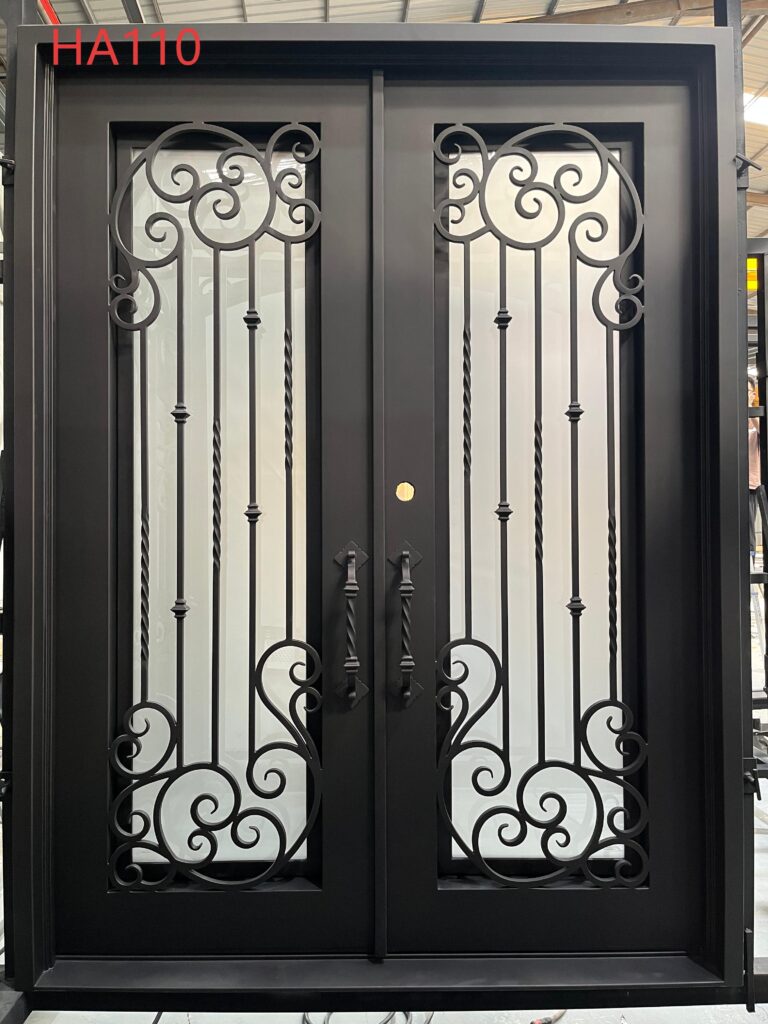
Glass Choices for a Wine Room Door
This is where a wine room door earns its reputation as a design centerpiece rather than a purely functional element, and it is also where the decisions get more nuanced than they first appear.
Full clear glass creates the effect most people picture when they imagine a wine room door: an unobstructed view straight into the collection, lit and ready to show off. It is a striking choice, and for a room that is meant to be seen from a dining area or entertaining space, it is often the right one. The trade off is light exposure. UV and visible light are two of the enemies of long term wine storage, so a fully clear glass wine room needs a lighting plan that keeps direct sun and harsh interior light away from the bottles themselves, rather than relying on the glass to filter it.
Frosted, reed, or textured glass options soften the view into something more suggestive than literal. You get the sense of depth and rows of bottles without a fully transparent window into the room. This works particularly well for wine rooms positioned somewhere less formal, like near a kitchen or bar area, where a little privacy is welcome. Our full range of glass styles includes several textured options that suit this purpose well, and we have covered the broader trade offs between clear and privacy glass in more depth in our glass options guide.
Low-E or reflective glass coatings reduce the amount of heat and UV transferring through the glass itself, which is worth discussing if your wine room sits somewhere that gets meaningful afternoon light exposure through nearby windows or an open floor plan. It is a smaller design decision than clear versus frosted, but it directly protects the collection rather than just the view of it.
A mix of iron and glass, rather than a full glass panel, is the most common approach for a reason. Iron paneling on the lower portion of the door adds structural rigidity and a visual anchor, while a glass upper section still delivers the reveal effect people want. It also tends to seal more reliably than an all glass door, since there is less total glass edge to weatherstrip against.
Choosing the Right Iron Door for a Wine Room
Size is the first practical constraint. Wine room entries are typically narrower than a standard front door opening, and the door needs to be built to that exact dimension rather than trimmed down from stock. This is squarely a custom order situation, and it is worth measuring the finished opening, not the rough framing, before finalizing a design.
Swing direction matters more in a wine room than people expect, mostly because these rooms are often tucked into a hallway, under a staircase, or adjacent to a dining area where floor space is already tight. A door that swings the wrong way can eat into usable space in a room that was never large to begin with. This is a conversation worth having early, alongside the standard door swing and hand options available across the collection.
Finish and hardware should generally take a cue from the rest of the home rather than standing apart from it. A wine room near a formal dining space often benefits from a finish that echoes nearby fixtures or the front entry door, so the room reads as an intentional extension of the house rather than an afterthought bolted onto a hallway.
What a Wine Room Door Costs to Get Right
Wine cellar iron doors are smaller than front entry doors, but that does not automatically make them cheaper. Custom sizing, insulated glass packages, and enhanced sealing all add cost independent of the door’s overall dimensions, and a genuinely well sealed wine room door is not the place to cut corners to save money.
Our broader breakdown of what custom iron doors actually cost applies the same underlying principles here: steel gauge, glass package, insulation quality, and custom sizing all move the number, whether the door in question is eight feet wide at a front entry or three feet wide leading into a wine room. What changes for a wine cellar specifically is that skipping the insulation or seal upgrades to save money has a direct, measurable cost, since a poorly sealed wine room works its climate control system harder every single day it is in use.
It is reasonable to think of a wine room door less like a decorative interior door and more like a small, specialized exterior door, because functionally, that is closer to what it actually is.
Climate Control Still Does the Heavy Lifting
A well built door is a critical piece of a working wine cellar, but it is not the whole system. Wine storage generally benefits from consistent temperature in a fairly narrow range and moderate, stable humidity, guidance widely discussed by wine industry publications such as Wine Spectator. The door’s job is to protect that environment from the rest of the house, not to create it on its own.
This matters for expectations. A beautifully built wine room door paired with no dedicated cooling unit will still lose the battle against a Las Vegas summer eventually, simply because the temperature differential across the seal becomes too large for any door to fully hold. The door and the climate control system are a pair, and both deserve attention if the goal is a collection that actually ages well rather than just a room that looks the part.
A Design and Resale Consideration Worth Knowing
Beyond the personal enjoyment of the space, a well executed wine room is increasingly recognized as a genuine value add feature in higher end homes, a point that has been noted in home feature research published through the National Association of Realtor. That value tends to correlate with how well built and functional the room actually is, not just its visual appeal in listing photos, which is one more reason the door itself, not just the racking and lighting, deserves real thought during planning.
A wine room with a door that fogs, sticks, or fails to hold a seal reads very differently to a future buyer than one that opens smoothly and shows a genuinely climate stable collection behind the glass.
Common Mistakes When Planning a Wine Room Door
A few missteps show up often enough in wine room projects that they are worth flagging before you finalize a design.
Measuring the rough opening instead of the finished opening. Drywall, trim, and flooring all eat into the actual usable dimension, and a door ordered to rough opening measurements will not fit correctly once the room is finished. This is a bigger issue in wine rooms than in standard doorways, since the margin for error is smaller on a narrower opening.
Choosing glass purely on appearance without considering the room’s light exposure. A stunning clear glass door positioned where afternoon sun hits it directly through an adjacent window can undo a meaningful amount of the climate control system’s work. It is worth walking through the room at different times of day before locking in a glass choice.
Treating the door as a single line item ordered after everything else. Racking systems, lighting, and flooring are often planned first, with the door treated as a final decorative touch. In practice, the door’s dimensions and swing direction should inform the room layout from the start, not the other way around, since it is the one element that has to interact correctly with both the room’s function and the hallway or space outside it.
Underestimating lead time. A wine room door is a fully custom item built to an exact opening, glass package, and finish. Building that timeline into the broader renovation or construction schedule from the beginning avoids a situation where the rest of the room sits finished and waiting on the one component that ties it all together.
Matching a Wine Room to the Rest of the Home’s Iron Features
A wine room rarely sits in total isolation from the rest of a home’s design language, and the door is a natural place to tie the room back into the house as a whole.
If your home already features iron elements, a front entry door, interior railings, or a gate at the property line, echoing that same finish family on the wine room door creates a sense of continuity rather than making the wine room feel like a separate, disconnected addition. This does not require an identical match. A shared finish tone, paired with a glass style suited specifically to the wine room’s function, strikes a good balance between consistency and purpose built design.
For homes without existing iron features, the wine room door is often the first place a homeowner introduces iron into the interior, which makes it a low risk way to test the material and finish before committing to it elsewhere in the house, such as a stairway railing or a secondary entrance.
Bringing It All Together
A wine room door sits at an unusual intersection. It needs to perform like a specialized exterior door, holding a seal against a real and constant environmental difference, while also functioning as one of the most photographed features in the house.
Getting both right at once is less about finding a single perfect product off a shelf and more about working through the specifics of your opening, your glass preference, and your climate control setup with someone who builds to the exact dimensions rather than adapting a stock size. That is exactly the kind of project our custom order process is built around, and it is worth a conversation early in your wine room planning, well before racking and lighting decisions lock in the rest of the space.
If you already have a sense of the style and finish you want, browsing the current iron door inventory is a useful starting point for finish and glass inspiration, even though the final wine room door itself will almost certainly be built to your room’s specific opening. And if you want to see the craftsmanship and approach behind the doors before committing to a design, our about us page covers how each door is built in house from start to finish.